Your Ideal Breasts

Dr. Capella has a very large experience in breast augmentation. He has personally placed over 1,000 breast implants for cosmetic purposes.
Dr. Capella has a very large experience in breast augmentation. He has personally placed over 1,000 breast implants for cosmetic purposes. Board-certified plastic surgeon Dr. Joseph Capella has over twenty years of experience specializing in body contouring and plastic surgery after weight loss. Having performed over 15,000 body contouring procedures, he is renowned in his field. Dr. Capella has vast experience in breast augmentation and has personally placed over 1,000 breast implants for cosmetic purposes. His dedication to surgical innovation and safety is reflected in his research, presentations, and publications. In his work, he has also collaborated with his father, Dr. Rafael Capella, a well-known bariatric surgeon. Read on to discover how breast augmentation with Dr. Capella can help you achieve your ideal physique, or call Capella Plastic Surgery today to schedule your breast augmentation consultation.


Crafted for You
Breast augmentation refers to any procedure designed to increase the size of the breasts. Often, breast augmentation is combined with a breast lift to help restore a more youthful breast shape and position. The most common way augmentation is achieved is with breast implants. Today’s implants are safer than ever before and come in a variety of shapes, sizes, and textures to ensure that your results are uniquely customized to your preferences and physique.
Several varieties of implants have been developed for breast augmentation over the last several decades. The implants in use today in the United States all have a silicone shell and are either saline-filled or contain a silicon gel. In addition, the implants may have a surface that is smooth or textured, and their shape may be either round or tear-drop. Dr. Capella’s preference for saline or silicon, smooth or textured, and round or tear-drop shaped depends on a patient’s particular clinical scenario. Dr. Capella will have a very detailed and thorough discussion with you about these various options.
The technique of breast augmentation can be performed through a number of different incisions. The three most common approaches are:

Adore Your Body
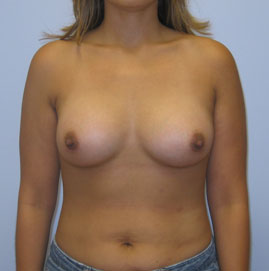
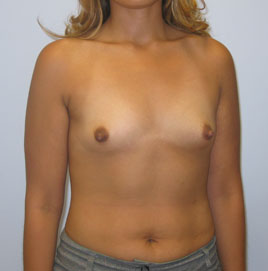
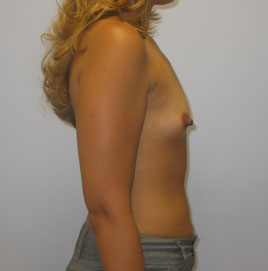
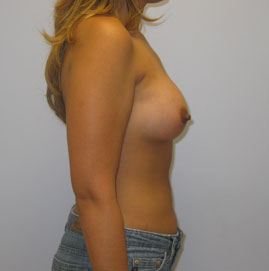
With breast augmentation New Jersey patients can choose their breasts' precise size and shape. The variety of implant types and surgical techniques in use today gives you a great amount of control over your results.
Many women enjoy the feminine look of larger breasts and the opportunity to achieve a more proportional figure. Breast augmentation with implants provides long-lasting results. Most patients enjoy their enhanced breasts for at least a decade, and some people’s implants remain in good shape for significantly longer.

Guidance for Your Transformation
At the initial consultation, Dr. Capella obtains a pertinent medical and family history, with a particular emphasis on breast issues. The timing of the most recent mammogram may be requested. He will also need to define the general goals and expectations of the patient. A focused physical examination will be performed.
Preparing for
Your Big Day
You will meet with Dr. Capella approximately two weeks prior to the planned procedure.
After the initial consultation for Breast Augmentation, it is important that you have adequate time to reflect on the planned procedure, in particular on issues of implant size. Scheduling surgery involves payment of a deposit. A period of at least two weeks off any medications containing aspirin, ibuprofen, vitamin E, or other medications that could adversely affect the ability of the blood clotting mechanism is required to prevent any bleeding complications. At this point, we require a consent form to be signed for the procedure. The size of the implants to be placed is finalized. Photographs are taken. All questions relating to the surgery are answered in detail. Arrangements should be made for transportation on the day of surgery.

The Day of Breast Augmentation Surgery
The operation usually lasts from one to one and a half hours.
Boost Your Body
Confidence
Rest. Relax. Recover.


It is necessary that a responsible adult transport the patient to and from the surgical suite and be available for the first 24 hours following the procedure.
Breast Augmentation patients should anticipate some discomfort until the blood level of the narcotic pain medication reaches a therapeutic threshold. This may require a double dose of the pain medication for the first two to three doses, after which a single dose is usually sufficient to manage the discomfort. Most patients are off narcotic pain medication within 24 to 48 hours. Antibiotics are continued for 24 hours following the procedure to lower the risk of infection. Activity should be restricted to no lifting, pushing, pulling, or driving for the first 48 hours, although walking is encouraged.
Certain events should be reported to the office immediately. A temperature over 100.0 degrees, chills or sweats, a markedly different degree of swelling between sides, and/or increasing, rather than decreasing pain. Our New Jersey Breast Augmentation Patients are seen approximately one week after the operation. At this time, Dr. Capella may indicate that the upper pole breast binder is no longer necessary. Most patients can resume a reasonably normal level of activity within three to five days after surgery. Following your first visit to the office, you will no longer be required to wear the surgical bra provided by Dr. Capella. At this time, and for at least two months following the surgery, we suggest you wear a sports bra or other garment that does not provide upward pressure on the breasts. It is critical during the recovery period that the implants are allowed to settle. Some bras, especially those with underwires, do not allow this process to take place.
Dr. Capella’s protocol
Breast Augmentation
Frequently Asked Questions
No. If you are not experiencing problems with your breasts or breast implants, there is no need to remove breast implants at ten years.
Dr. Capella has performed breast augmentation for over 25 years and placed over 1,000 implants during that time.
Bleeding (hematoma formation). Significant bleeding into the space around the implant can occur in this operation, although it is unusual. Large collections of blood around the implant require a return to the operating room for removal. Not doing so would produce an abnormal shape of the breast and a potential for hardening in the future.
Infection. Some of the tissues of the breast normally contain bacteria and are likely to come in contact with the implant during augmentation surgery. All of our patients are placed on antibiotics during surgery and afterward. The risk of infection is less than one percent.
Loss of nipple sensation. Most patients experience some change in nipple sensation following augmentation surgery. The change may either be increased or decreased sensation and lasts several weeks. Nevertheless, the change is usually temporary. Permanent loss of sensation is unusual.
Malposition of implants. Every effort is made to make the breasts appear as symmetrical as possible. This requires fine adjustments in implant placement. On occasion, a second procedure is required to achieve satisfactory symmetry.
There is also a risk of certain long-term complications:
Capsular contracture (hardening of the breasts by the presence of scar compressing the implant). Every individual forms some scar around the implant. This is a normal response of the immune system to a foreign body. For not completely understood reasons, some individuals form thicker scars than others. A thick scar may distort the breast and even cause discomfort. The incidence of this problem is decreased with submuscular implant placement and is approximately ten percent. When treatment is warranted, the scar is incised or removed, and the implant is replaced.
Interference with mammography. Implants interfere with the ability to image the breast by mammography to a variable extent. Implants placed behind the pectoralis muscle allow the breasts to be imaged more effectively by a method called the Eklund Technique. Using this technique, the presence of implants does not represent a statistically significant risk to the patient of missing early breast cancer.
Deflation. The incidence of saline implant leakage is approximately two percent in Dr. Capella’s practice. Today’s implants are better than a decade ago, so it is difficult to accurately predict what the true leakage rate is. It may actually be lower. In the event of implant deflation, saline (the solution of which 70% of our bodies are made) leaks into the surrounding tissues and is absorbed. A relatively brief, simple surgical procedure is required to remove the old implant and replace it with another. In the case of demonstrated saline implant leakage, the implant manufacturers provide a new implant at no charge for the lifetime of the implant and assist with the costs of anesthesia and the operating room for ten years. Dr. Capella’s surgical coordinator will provide more details regarding implant warranties as these have changed over time.
Interference with breastfeeding. Although interference with breastfeeding following breast augmentation is extremely rare, it is possible that the breast gland ducts that empty the breast gland may be divided during breast augmentation and thus interfere with lactation. Additionally, the breasts may be too uncomfortable when engorged, and so lactation may be hindered in this way.
Visible rippling. Individuals with small breasts who have had a large augmentation can be at risk for visible rippling of the overlying skin. This problem is much more common with textured implants and those placed above the pectoralis muscle.